





You’re part of something bigger
Someone important in your life is trying a Lingraphica device. Together, we’ll take this step with care and confidence. You’ve got their back. We’ve got yours.





Because communication is shared
Testimonials
Success stories
No two communication journeys are the same. Here’s how real people are making AAC work for them — with Lingraphica by their side.










The Lingraphica experience, step by step
If your loved one has an SLP, they’re likely working closely with Lingraphica to guide the trial and provide strong support. So rest assured, they already have a great team. But you’re part of that support team too. Your encouragement, interest, and support matter more than you might think.

Step 1:
Connect with our team
We get to know your loved one’s needs and see if a device trial is the right next step.

Step 2:
We check your coverage
Our team verifies insurance and arranges the trial.

Step 3:
Try a device for free
Use the device, get comfortable, and explore if it’s a good match.
You are here

Step 4:
Enjoy a lifetime of support
Good fit? A permanent device is on the way, with lifetime support included.
FAQs for care partners
If this feels new or overwhelming, you’re not alone. These are some of the most common questions care partners ask. We’re here to help you feel more confident, one step at a time.
Contact UsPeople try Lingraphica devices in speech therapy for lots of different reasons. Here’s what to know:
First, some important terms:
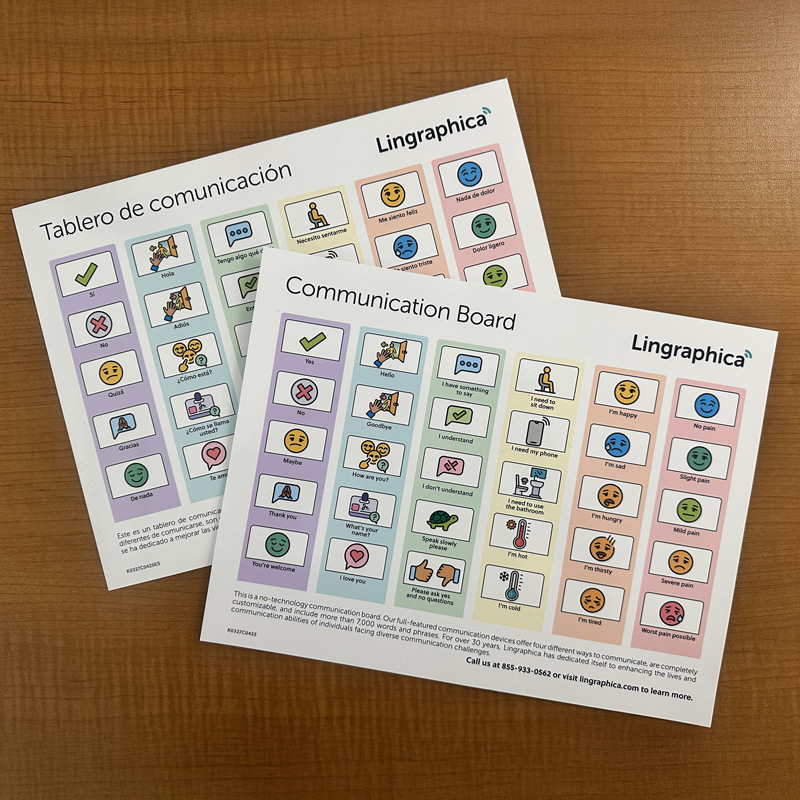
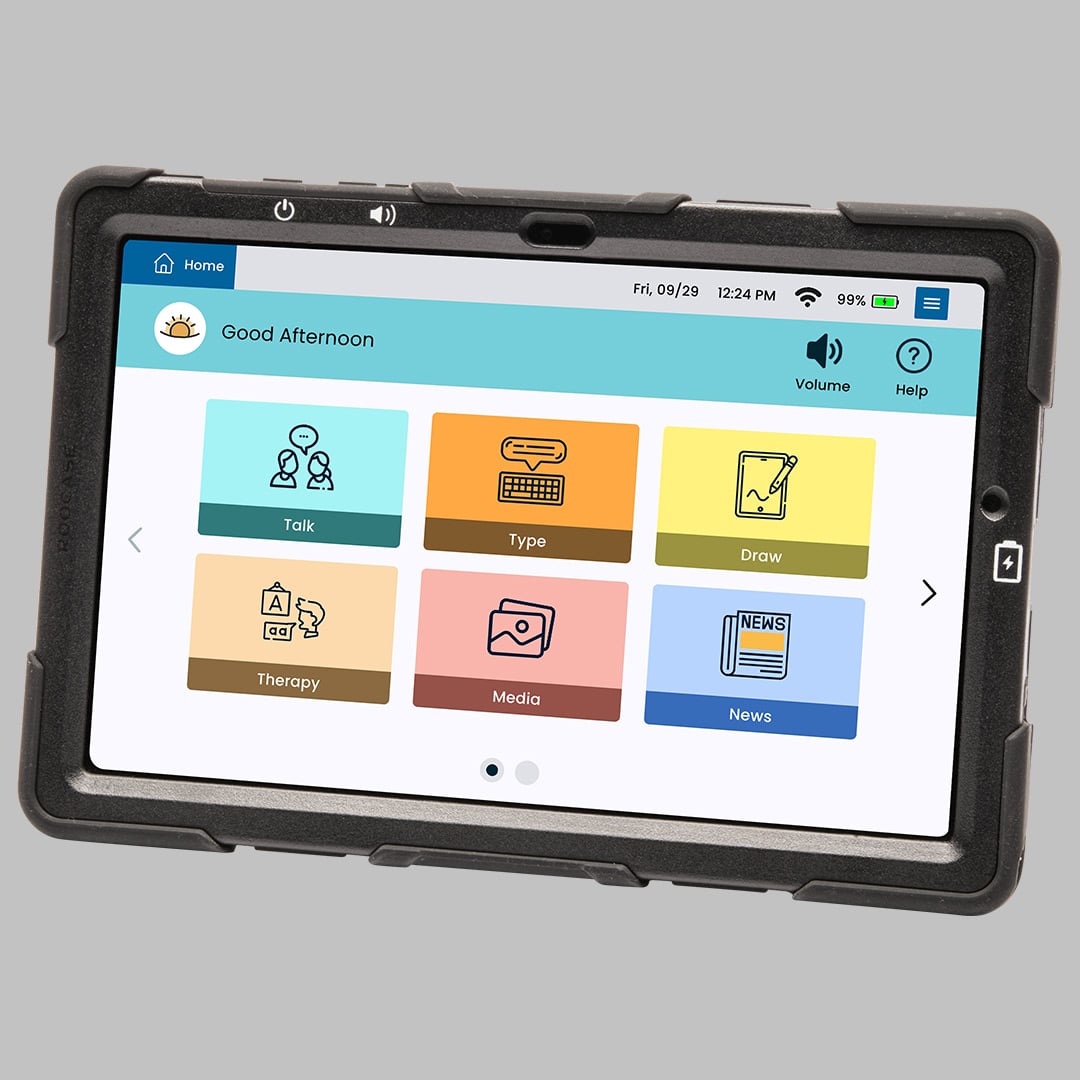
Lingraphica devices are a type of “augmentative and alternative communication (AAC)” or “AAC device.” AAC devices have been shown to increase independence, reduce feelings of isolation, and improve overall communication for people with a variety of diagnoses (ASHA, 2025).
For adults with communication challenges due to a sudden medical event (like a stroke, brain injury, surgery, or accident)…
An AAC device can give your loved one the ability to communicate right away. Even if they can speak some words, AAC can reduce communication frustration now and support them throughout their speech and language recovery (Dietz, Wallace, & Weissling, 2020).
For adults with a neurodegenerative condition (like primary progressive aphasia or Parkinson’s disease)…
If your loved one’s condition will impact their speech in the months or years to come, an AAC device will give them a way to keep communicating. Research recommends trying an AAC device as early as possible (Fried-Oken et al., 2015). This gives you both time to learn how the device works and ensure it fits your loved one’s needs before they rely on it every day.
For children or young adults with speech or language delays…
AAC can provide your child with communication access right away and help them develop their communication abilities. The American Speech-Language-Hearing Association (ASHA) recommends introducing AAC as early as possible to encourage the best communication outcomes. There aren’t any prerequisite skills for using AAC. In fact, research shows that children as young as two years old have learned to use AAC devices — even with cognitive delays (Romski et al., 2010; Cress, 2003).
No, your loved one doesn’t need to exclusively use their Lingraphica device to communicate. We recommend they use any combination of speech, device use, or other strategies (like pointing, drawing, or gestures) that let them be understood!
AAC will not stop your loved one from speaking. In fact, research has shown that AAC can actually improve speech and language skills for children with speech and language delays, and for adults with aphasia (Fried-Oken et al., 2015; Dietz, Wallace, & Weissling, 2020).
Some device users make so much progress after using their Lingraphica device that they don’t need to rely on it anymore — and we love those stories!
Don’t worry, we’ve helped thousands of people who don’t feel “tech-savvy.” We’re here to help you, too!
During the Lingraphica trial period, your loved one’s Care Partner Success Specialist (CPSS) can help answer any questions you have. If the trial leads to a permanent device, our team will still provide free tech support and communication coaching for as long as you have the device. Support is available in both English and Spanish.
Nope, no surprise fees here! You’ll have access to free, personalized tech support and communication coaching for as long as your loved one has their device. It’s really that simple. We provide support in English and Spanish.
The answer to this question can feel a little complex, but stick with us here! We are committed to helping you understand any out-of-pocket costs upfront.
Lingraphica devices are considered “durable medical equipment.” This designation means that the device could be partially or even fully covered by health insurance. Lingraphica is in-network with Medicare, Medicaid, Veterans Affairs, and many commercial insurances.
At the beginning of a Lingraphica trial, we will check your loved one’s insurance benefits and keep you informed about any out-of-pocket costs. If their health insurance doesn’t cover the cost of the device, our team will also help you explore any financial aid resources that can make the device more affordable.
We stand behind providing high-quality, durable devices — but, we know accidents happen. If your device breaks during the trial period, we’ll replace it for you. If you choose to purchase a Lingraphica device, we offer a five-year warranty in addition to free lifetime tech and communication support.
Lingraphica takes your privacy seriously. Your data is encrypted and stored using industry-standard security measures. Our team can only view information on your device when authorized by you and deemed necessary. Our development team regularly updates security measures to make sure your information is always protected.
Support, and lots of it! If you have questions during the device trial period, your Care Partner Success Specialist (CPSS) is your go-to person. If you aren’t sure who your loved one’s CPSS is, we’re happy to put you in touch with them. You can get in touch with us here or give us a call at (888) 965-6005.
We’re here for you. If you have any other questions about the trial, insurance, or next steps, contact your Care Partner Success Specialist or get in touch with us here.











What are the benefits of AAC devices?
AAC devices empower users to express needs and make choices, promoting independence in daily routines.
Increased independence for everyday activities
AAC devices empower users to express needs and make choices, promoting independence in daily routines.

Increased independence for everyday activities
AAC supports confident communication, helping users engage more fully at home, school, work, and in their communities.

Increased independence for everyday activities
Reduce communication breakdowns with reliable ways to express yourself when speech is unclear or hard to produce.
Increased independence for everyday activities
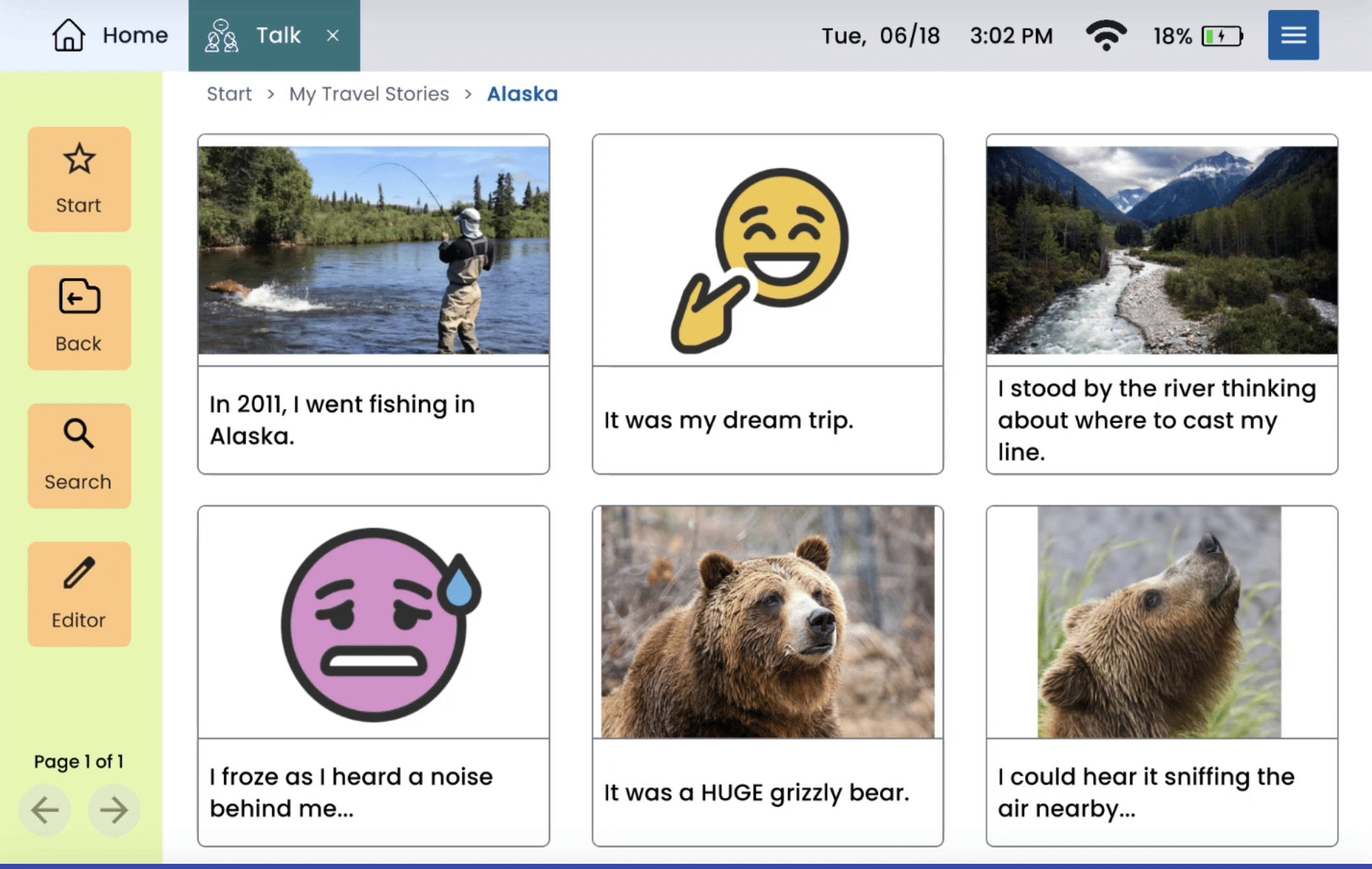
With personalized icons and stories, AAC devices help users express emotions and stay connected to family and friends in meaningful ways.